


August 17, 2026
Empowering for Life
A story about accepting disability and speaking up as a leader.

Empowering for Life
By
A story about accepting disability and speaking up as a leader.
Kerryn Burgoyne
Content warning: This story discusses ableism, psychiatric institutionalisation and segregation of people with disability.
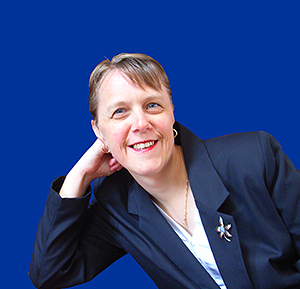
My name is Kerryn Burgoyne, and this is my story.
I was diagnosed with Asperger’s Syndrome—now diagnosed as Autism Spectrum Disorder (ASD)—when I was 30 years old. Until then, I had spent much of my life without an explanation for why I experienced the world differently. When I was growing up, my family and community knew very little about autism. When my mother spoke to doctors about the signs she noticed in me as a child, she was told she was simply an overanxious parent and that I would grow out of it.
But I did not grow out of it. Instead, I grew up feeling misunderstood.
Before my diagnosis, I was often ignored, pushed into the background, and treated as though I belonged in the “too hard” basket. Many people did not want to understand me, speak to me or include me. Some called me strange, or dismissed me with hurtful words.
For decades, many families raising children with disabilities faced not only personal challenges, but also a society that struggled to understand them. Throughout the
late 1950s, the early to mid-1960s, and particularly during the 1970s and early 1980s, in Australia, parents were often given devastating advice: place a disabled child in
institutional care, go home and forget about them, and try again for a "normal" family.
It was a painful reflection of attitudes that prioritized separation over support and silence over understanding. Historically, the concept of "disability" was not recognized with the profound understanding and awareness that it today carries in contemporary society. Back then I was classified as never being “normal”!
I ask you this question today; “What is normal to you”? “What does normality look like for many people who live the realities of life that’s happening around us in today’s society or around the world”?
I grew up witnessing those realities. Rather than allowing that history to define her future, I chose to challenge it.
At school, I was told frightening things about my future, including that I would end up locked away, excluded from society, or unable to live a full life. My mother was also told by many professionals to keep me at home because I would never be able to learn anything.
Those messages were painful. I was also told by some family members and others around me that I was useless or stupid. For a long time, those words shaped the way I saw myself.
Receiving my diagnosis changed everything.
For the first time, I had a name for what I had experienced throughout my life. I could begin to understand myself properly, develop strategies, and move forward with greater confidence. I also chose to apologise to people for moments when my actions may have been misunderstood. Some people accepted this with kindness, while others did not. Over time, I learned to let go of the people who could not accept me.
My diagnosis helped me feel better about myself. It gave me the language and understanding I needed to begin a new chapter. I started what became a 10-year journey of personal growth, learning, and self-acceptance. In many ways, I felt as though I was finally catching up with myself—physically, emotionally, mentally and personally.
Writing, Speaking and Building K-Talk
Between 2005 and 2007, I wrote The Goal, a self-help course book for the community. That followed the course “The Power of Positivity”. In 2006, I took both these books and shared them with a former CEO of an organisation to seek her opinion. She told me they were both excellent books and strongly recommended that I sell them both online as a business.
That encouragement helped me take an important step forward. In 2007, I started my business, KTalk.
I ran KTalk for eight years, travelling across Victoria and interstate into Queensland. I delivered seminars in Brisbane, Townsville and other communities, and I also contributed to seminars for other organisations, including Amaze (Autism Victoria), Empower Autism, previously known as Asperger Services Australia.
I’ve spoken to many people about my life story and delivered training and educational sessions for schools, community groups and universities. In one instance, I educated 500 students to help them better understand and support a peer in their school with autism spectrum disorder.
Sharing my story was exceptionally powerful.I remember university students being moved to tears, and I felt deeply grateful that my experiences could reach people in such a meaningful way. Speaking and educating others became more than a part-time job. It empowered me as how I’ve impacted others over the many years of my life that I’ve been running this business.
Discovering Leadership
For much of my life, I did not believe I had leadership skills or anything valuable to offer society. That changed in 2008 when I enrolled in my first leadership course for people with disabilities through Leadership Plus.
That course opened my eyes. It showed me that I had knowledge, experience and personal strength that could help others. I also mentored people who were affected by disability in different ways from me. Many faced challenges greater than mine, yet they did not allow those challenges to stop them from achieving their goals.
The participants empowered me and taught me more about myself than I had ever known before. They helped me feel proud of my disability rather than ashamed of it. By the end of the course, I felt incredibly content and proud of what I had achieved, and of who I was as a person.
Continuing the Journey
After the success of The Goal and my leadership courses, I decided to write Aspektism For Teens/Adults followed by four more courses between 2010 and 2012. Each project was part of my commitment to sharing practical tools, encouragement and lived experience with the wider community. All these courses have now been updated to reflect today’s standards.
More recently, I reopened my business KTalk in May 2023. Ever since then I have now become not only an international, renowned, sought after autism Keynote speaker at major conferences globally, but also an international author through my website https://kb.site.
With the strength, determination, and exceptional resilience that I have developed over my life journey, I very strongly believe my lived experience, leadership journey, and advocacy work have given me a strong foundation to make a meaningful contribution.
Who I Am Today
I have made a contribution to the community by sharing my life story, offering my personal perspective, and helping others better understand autism, disability and inclusion. I have also contributed to leadership and development by showing what is possible when people are supported, understood and given the opportunity to be heard.
I am a leader.
I am a developer.
And I am proud to say that I am a leader in the community and a person on the autism spectrum.
Note – This story was first published on 26 April 2022, and updated 17 August 2026.
Tip: If you would like to hear more about Kerryn’s story, you can watch her video on the Speakers Bank YouTube channel.