


June 1, 2026
Travelling in a wheelchair is easier than you think
Nina-Marie Butler
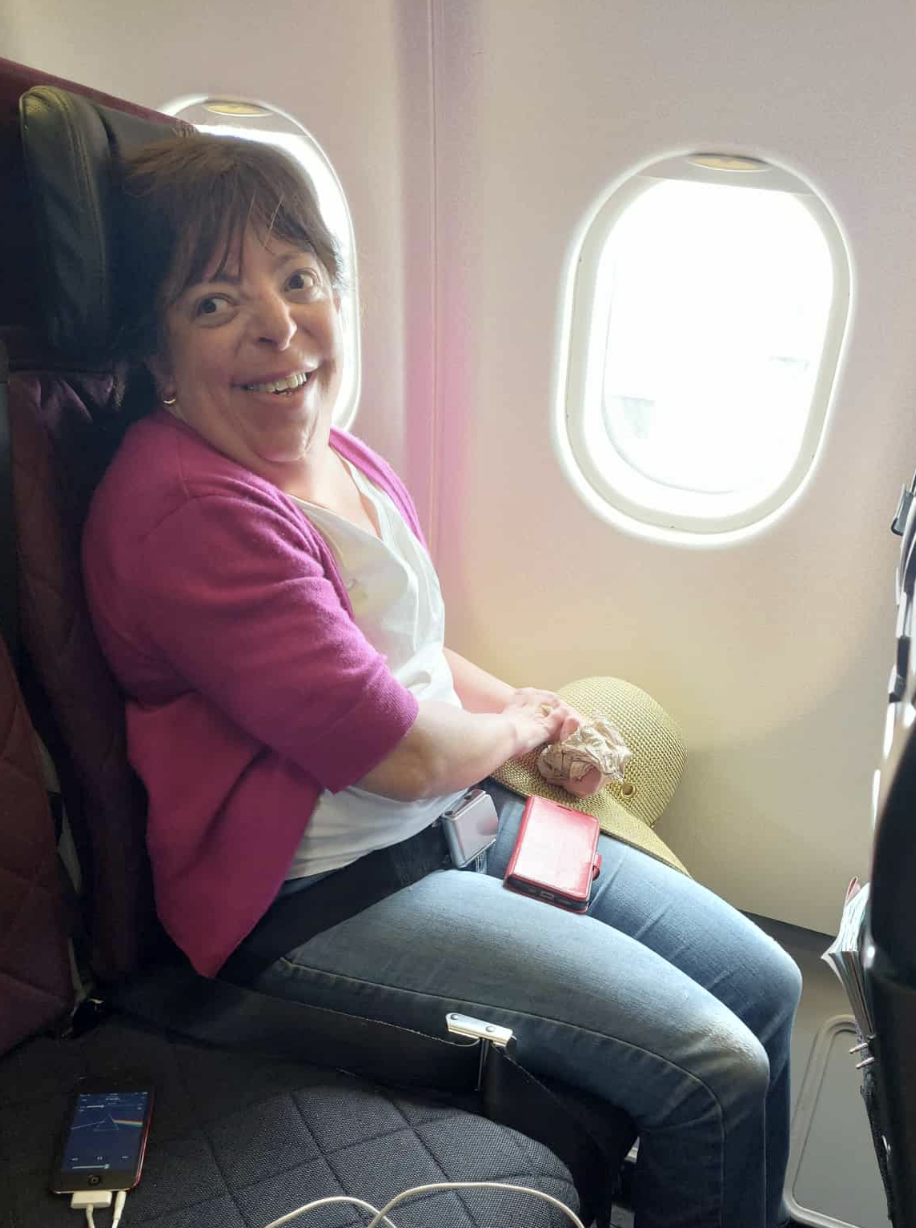
Travelling in a wheelchair is easier than you think
By
Nina-Marie Butler
Recently, while travelling in Ballarat Victoria, I got chatting to a lovely lady who was desperate to go on a holiday. She told me she hadn’t been away for ages because she wasn’t sure if it was possible for her son to travel and she wanted them to go together.
It transpired that her son and I are remarkably similar. We are both in our forties and are ambulant wheelchair users. So, I was able to give her a little bit of guidance. These are the tips I shared:
--
Note: These tips are based on my experiences of travelling with a standard collapsible wheelchair only.
--
Transport:
Nowadays, many (but not all) buses and trains in various countries are wheelchair accessible, or are able to become so, making it simple to use them. Aeroplane travel is slightly more complicated, but it’s possible. This is how it works:
· All commercial airlines should be able to accommodate wheelchairs. It is a good idea to mention that you have a wheelchair when booking your flight. Upon doing so, the carrier will ask for details such as height and width etc. As well as the type of chair you use.
· Usually, you get the option of checking your wheelchair in as luggage (to be collected at oversized baggage claim at the other end), or to stay in your own wheelchair until boarding. If you choose to check your chair, you can request a loaner. But be aware, these chairs can only be pushed by someone else.
· Disabled passengers are usually given priority boarding. So, make yourself known to the gate staff once you arrive in the departure lounge.
· Then you’re taken to the aircraft before other passengers, to avoid the usual jostle, and allow you to receive a brief rundown on emergency procedures from staff. As evacuation is slightly different for passengers with mobility issues.
· At the door of the plane, a staff member can assist you to walk to your seat if you are able. And if not, you need to transfer to a specially designed chair that fits in the aisle, to get to your seat.
· At the end of the flight, you will be the last to disembark, but either your own or a loaner chair will be there to meet you, depending on what you arranged when you checked in and received your boarding pass.
· Wheelchair users don’t go through the airport body scanner. Instead, you will have a full body pat down, performed by a member of staff of your gender and they may swab your clothing for traces of contraband etc. you will be given the option to consent or not to this.
· If you are seated in your own wheelchair, they will swab that too, and inspect underneath it with a long-handled mirror. You will not have to leave your chair during this procedure.
Accommodation:
There are lots of hotels and accommodation spots (in Australia anyway), that are accessible for wheelchairs. Having said that though, it’s always a good idea to do thorough research, and contact the place you plan to stay at for clarification (if you need it), before you get there. Other things to consider are:
· If a website says the accommodation is “disability friendly,” it doesn’t automatically mean the place is accessible. Further, even when accessibility is mentioned, it’s always handy to check what the term means to that particular proprietor. I once stayed at a hotel that had fully accessible rooms, but to enter the reception and/or the in-house restaurant, you had to climb up stairs. I have also stayed in places that boasted accessibility, but the doors/entries/hallways were very narrow. Or the showers themselves could accommodate a shower chair, but a wheelchair couldn’t fit into the bathroom.
· Similarly, it is very unlikely, although not unheard of for accommodation to include seating in the shower even when advertised as accessible. So, bring your own shower chair if you need one. I have seen places that mention shower chair availability on their website though. However, they are rarely in – built, so you may need to request one from the venue, which may incur a hire fee.
· Places usually have a limited number of accessible rooms. Therefore, unless you can be flexible with timing its best to book well in advance.
And now for the fun stuff:
Especially when travelling in Australia, your Companion and ACROD cards (if you have one), are handy to have with you. Apart from the obvious concessions (which may vary from state to state), some vendors will honour them, even if it isn’t advertised, and it could save you some cash. So, it never hurts to ask.
There are many venues (mainly for concerts and sporting events), that have drop off zones reserved for taxis and VIPS only, but by showing your ACROD card to the parking attendant, you may be able to stop there with a rideshare too. This is great because these spots are usually close to the entrance, and often under cover.
If you’re planning to do a guided tour at your destination, again it’s a good idea to do your research before you get there. Most companies will mention whether or not they are accessible in the blurb about the tour, but it’s still a good idea to mention you’re a wheelchair user when booking.
In my experience, historical sites are often inaccessible purely because of the time they were built, and the restrictions to development of such sites.
However, with notice your tour guide may be able to find a workaround and, sometimes this means you get to see bonus things other tourists never see.
Bon voyage!